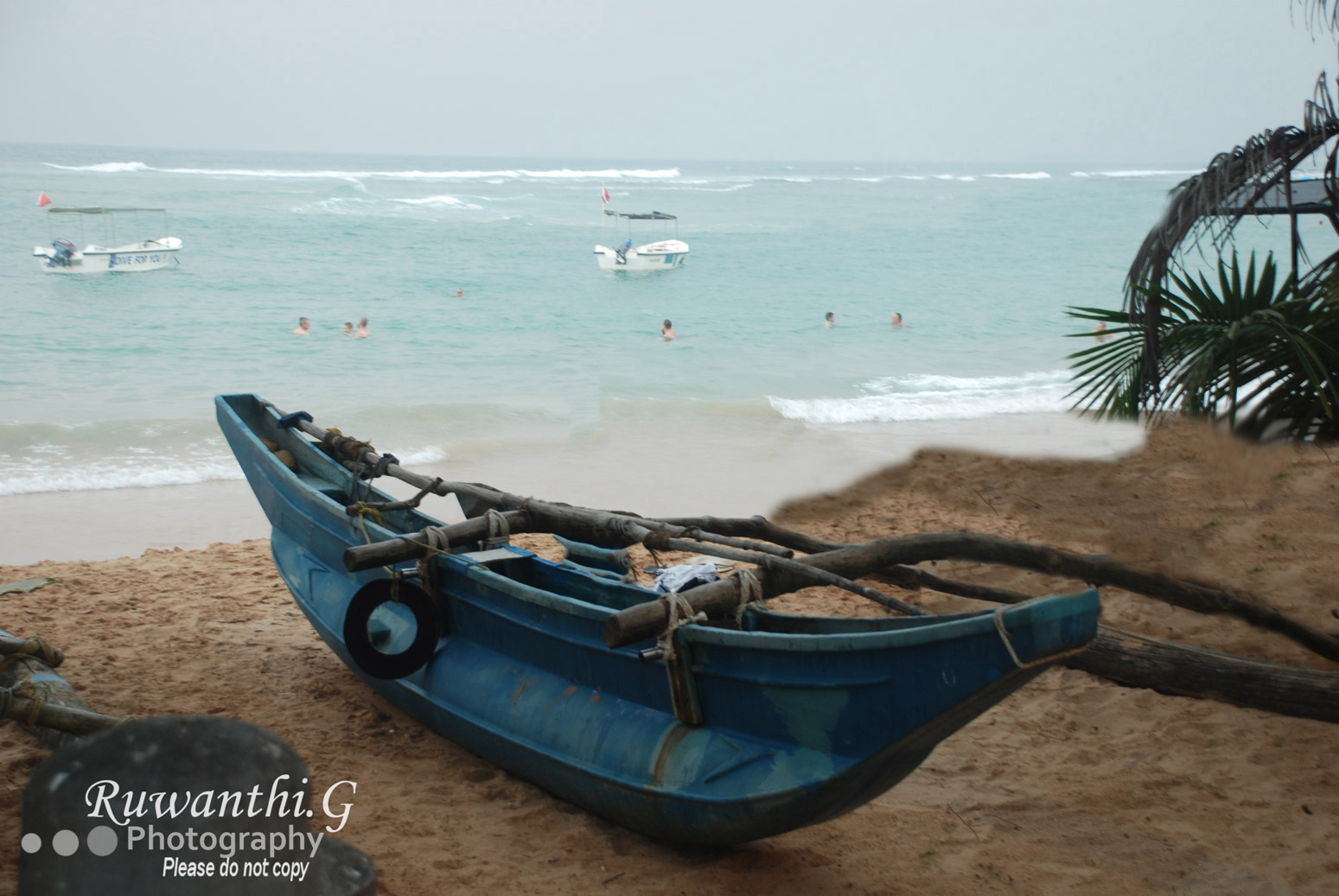
The lamp flickers and bathes the small surrounding area with a golden hue, otherwise, the place is in darkness. The smell of burning oil mingles with the smell of dawn not yet broken. Two silhouettes move in this semi-darkness. The man slowly walks away into the darkness outside his hut. Deftly finding his way to the shore, the woman follows and stands at the doorway of the hut with her hands on her hips, watching him walk into the darkness.
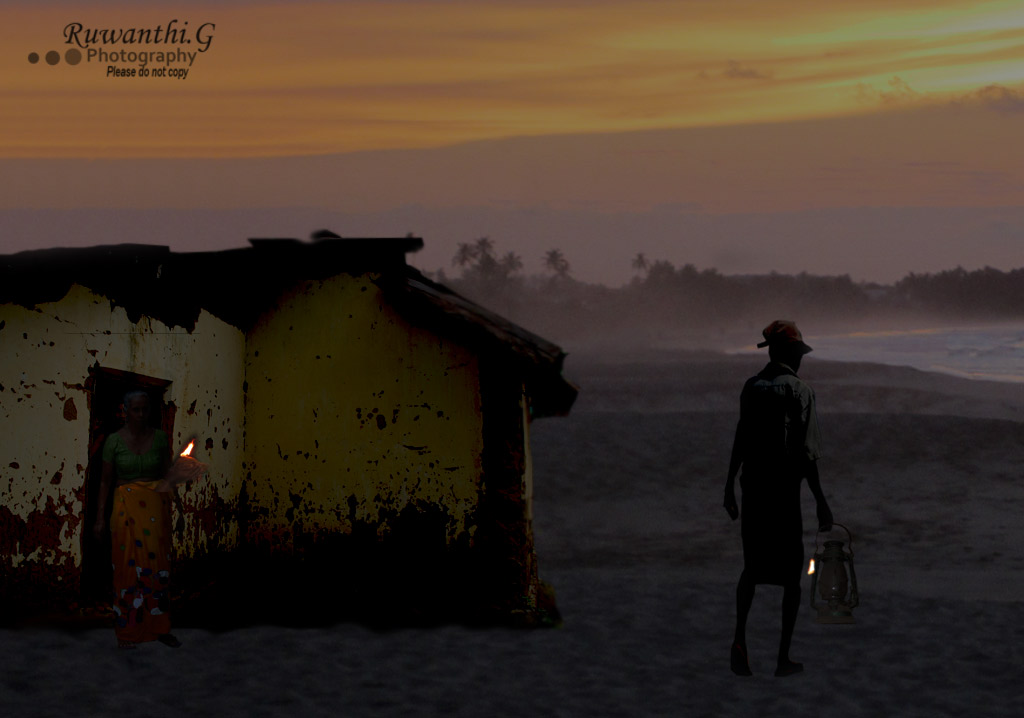
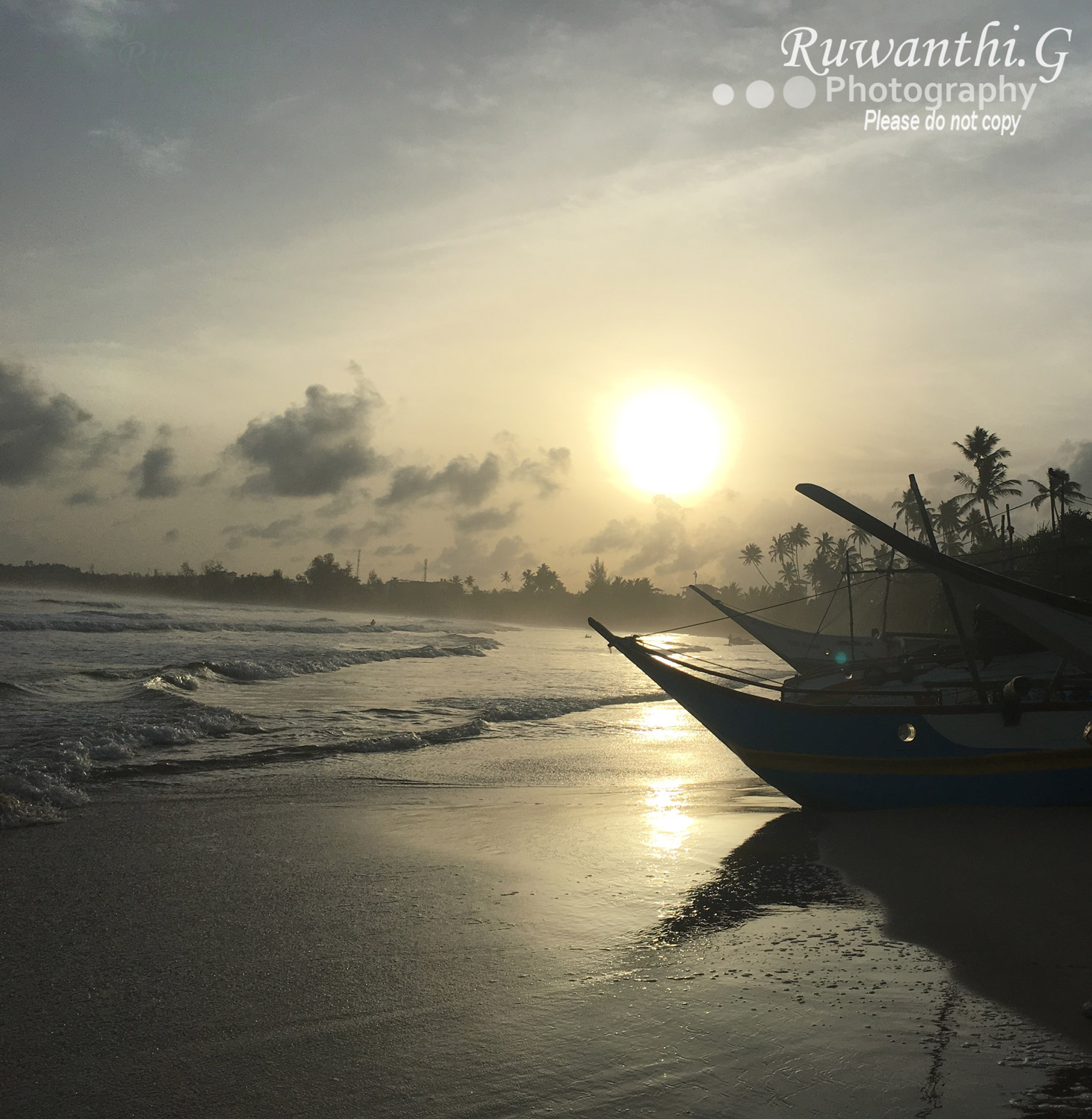
Like a giant standing in the darkness is more darkness. Peering with your eyes half shut one could make out a boat. A few people have already gathered under the light of a few lamps. Further on, you can just about make out a line of small boats with people hovering busily around them. They lift their nets into the boats and some of them scramble in. Sarongs tucked up around their knees, a bandana around their heads, and a torn shirt around their back, they work around the boats, gathering, filling, and pulling. Some have half-smoked cigarettes hanging from their mouths, its strong scent destroying the sweet smell of the sea and dawn.
As the quiet lapping of the sea waters grow fainter with the noise from the people talking, one by one the boats set off. The harsh sound of the engines breaks the quietness and pierces your ears. Like a volcano erupting. They set off to work.
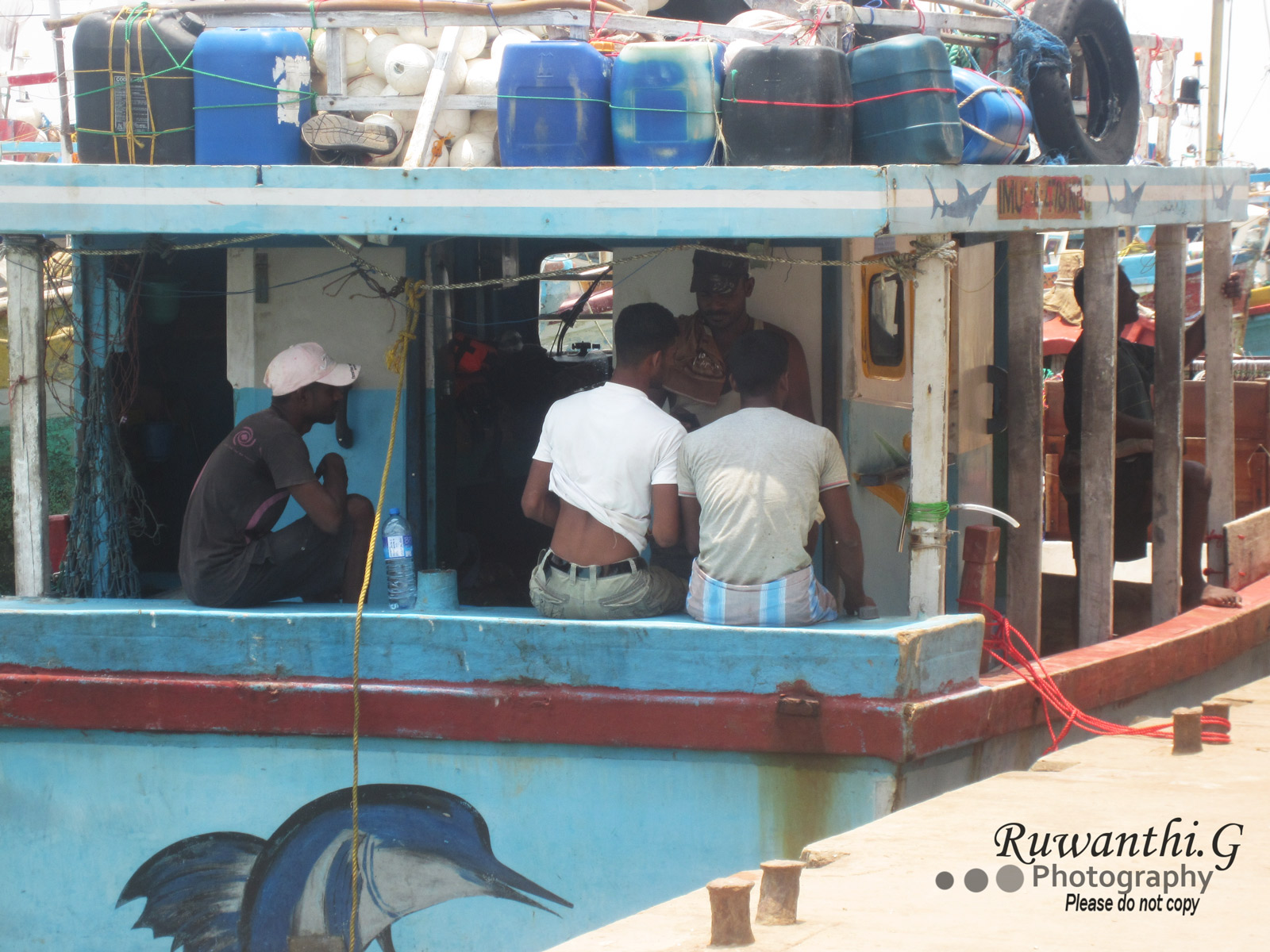
The fishermen who leave early morning return home by noon. Their arrival busy and noisy. One by one the boats arrive at the Pier. Their bellies are loaded with fish. These huge monster boats were made of wood, weather-beaten, and their paint all peeled off leaving just the brown raw wood visible. The harsh rays of the sun had eaten away the paint.
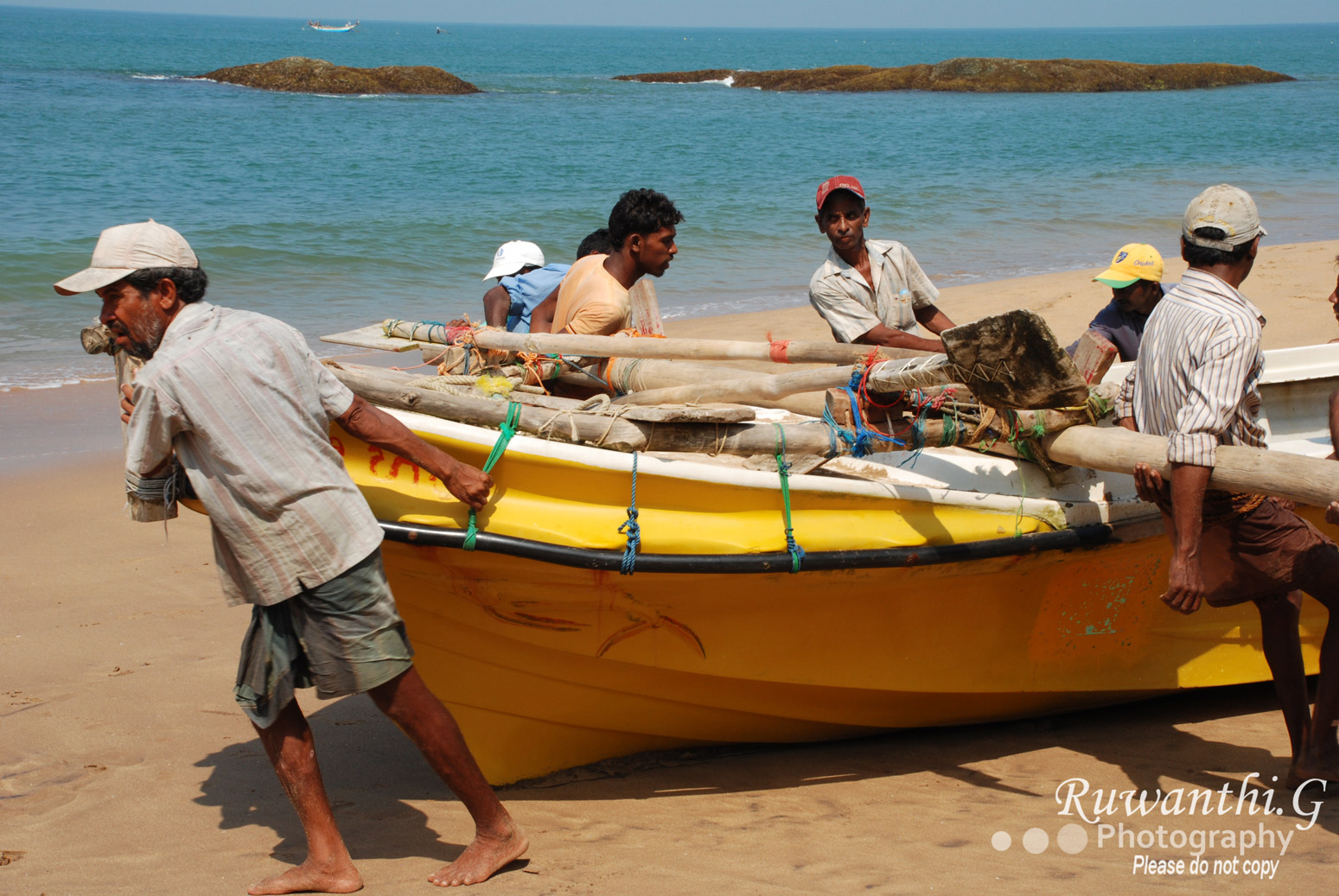
As the boats return, many men from nearby huts converge to greet them. They are ready to heave the boats to the shore. They throw the rope and tie it to the pier. As the fishermen disembark, the helpers clamber in and descend to the bowels of the boat and bring out one by one the yellowfin tuna, the seer fish, the mullet…. all in different shapes and sizes. Fresh, big, and heavy.
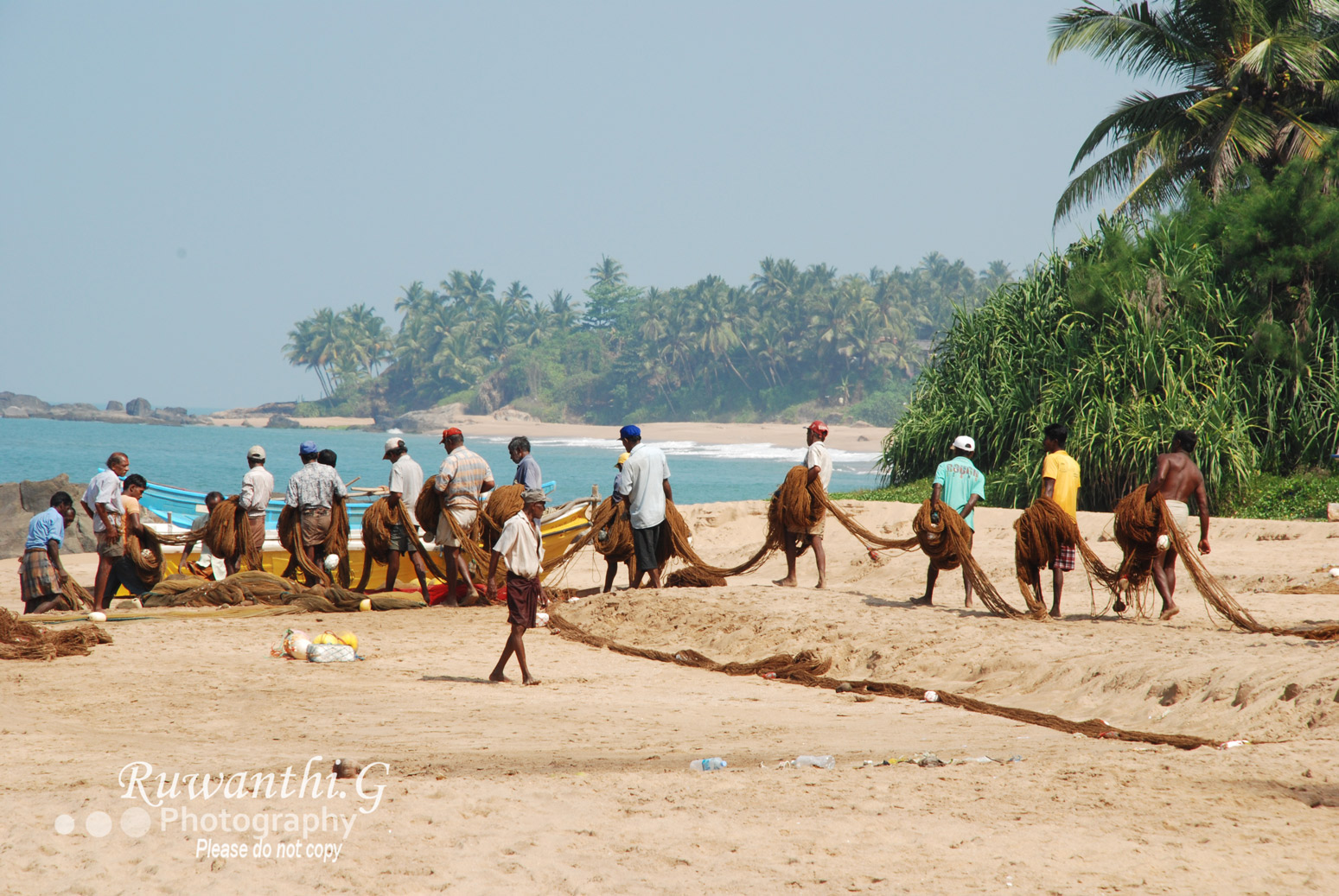
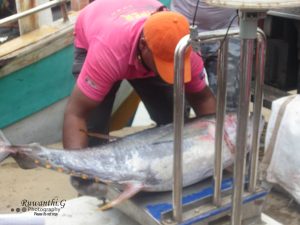
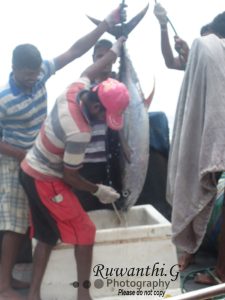
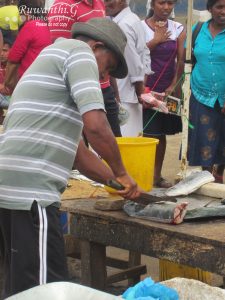
The multi-day boats are full and more help is needed here. The inner chamber is filled with ice. And the fish are neatly stacked inside to preserve their freshness. Several men are needed to unload the fish. They stand in a line and pass the fish from one to another up to the weighing scale. Primitive to its very core, but efficient.
As each fish is placed on the scale several men bend and peer at the worn-out dial of the scale while two others scribble the details down on torn and half-wet books that have seen better days. The pages were all dog-eared and torn at the edges. The white pages now cream and grubby. But it is the single most important document in this entire process.
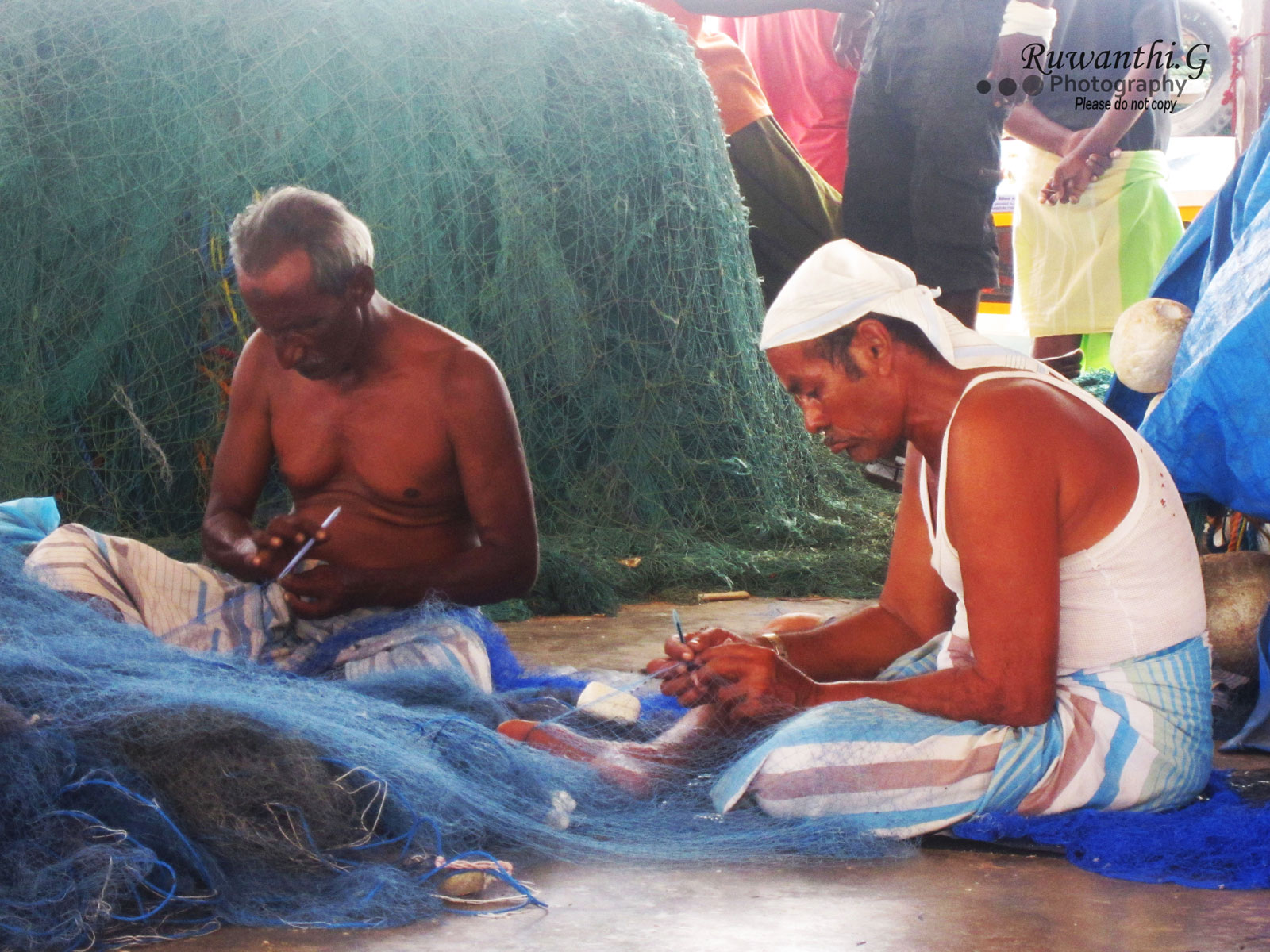
The middlemen have already arrived to assess the catch. The deal will be soon done. The nets will be mended and untangled, the ropes neatly rolled up and the boat cleaned and the day would be over. Then all that is left to be done is to sit down with a nice bottle of arrack (Sri Lankan liquor) with fellow fishermen and friends and go home for a nice spicy home-cooked meal of rice and curry.
The wife stands at the doorway of her wattle and dab hut with its low-slung doors and thatched roof. The bigger children play hopscotch on the beach outside their hut, the grandmother sits on the makeshift bench like a medusa with her snake-like hair flying in every direction as she combs it and tries to tame it. The dusk light made her grey hairs shine in the semi-darkness. The snotty-nosed toddler crawls about on the cow-dung floor putting whatever comes his way into his mouth. All waiting for the breadwinner to come home.
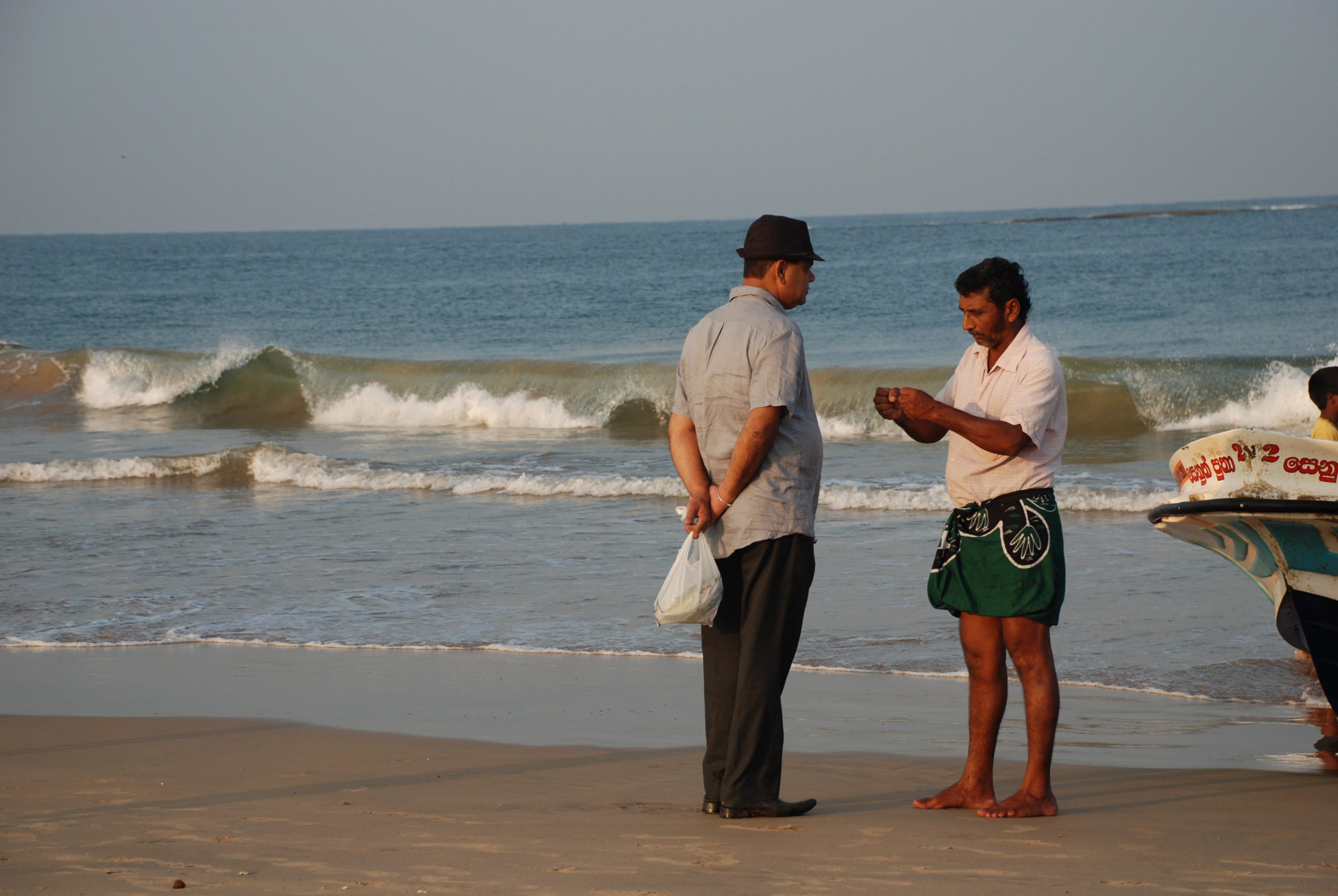
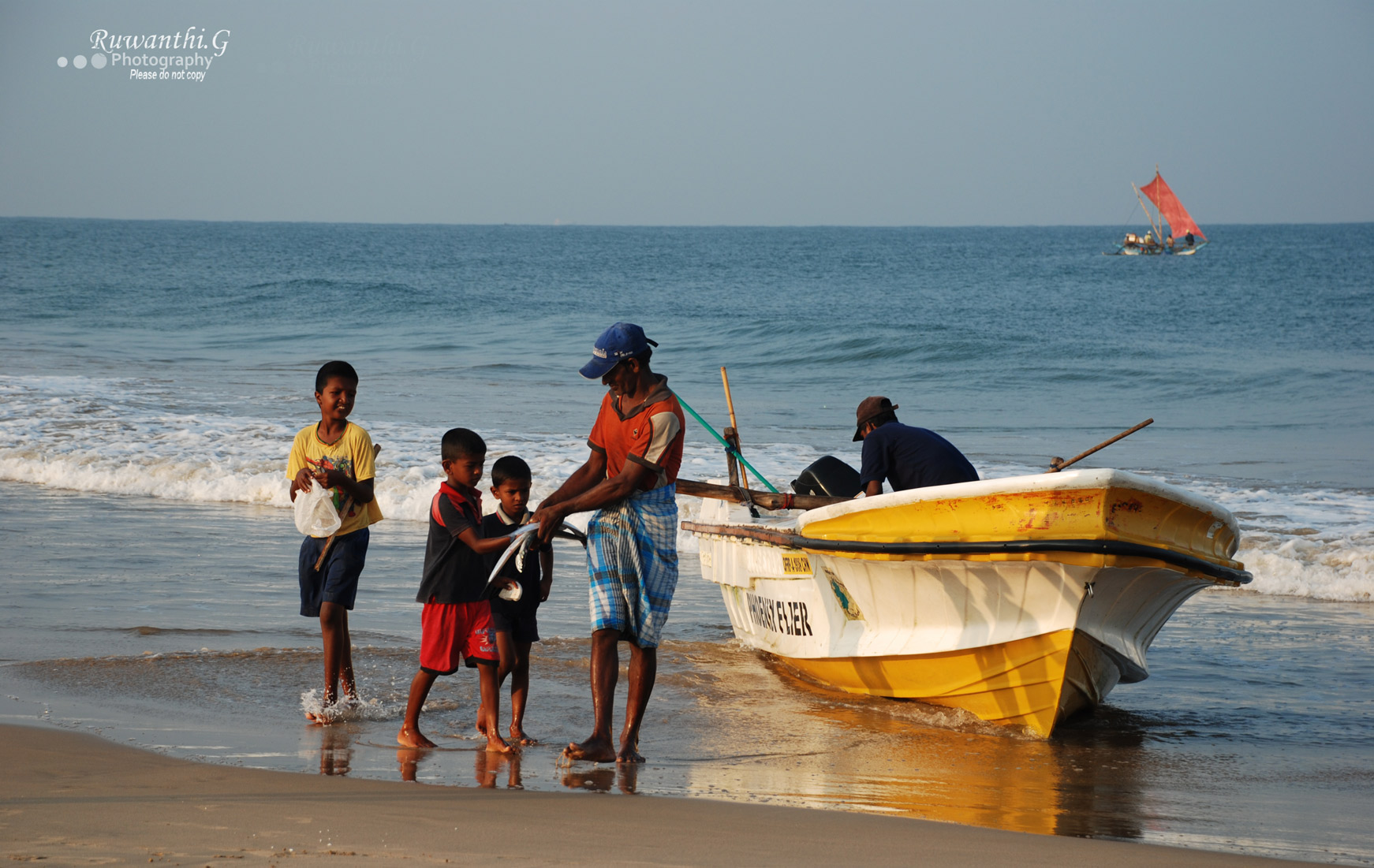
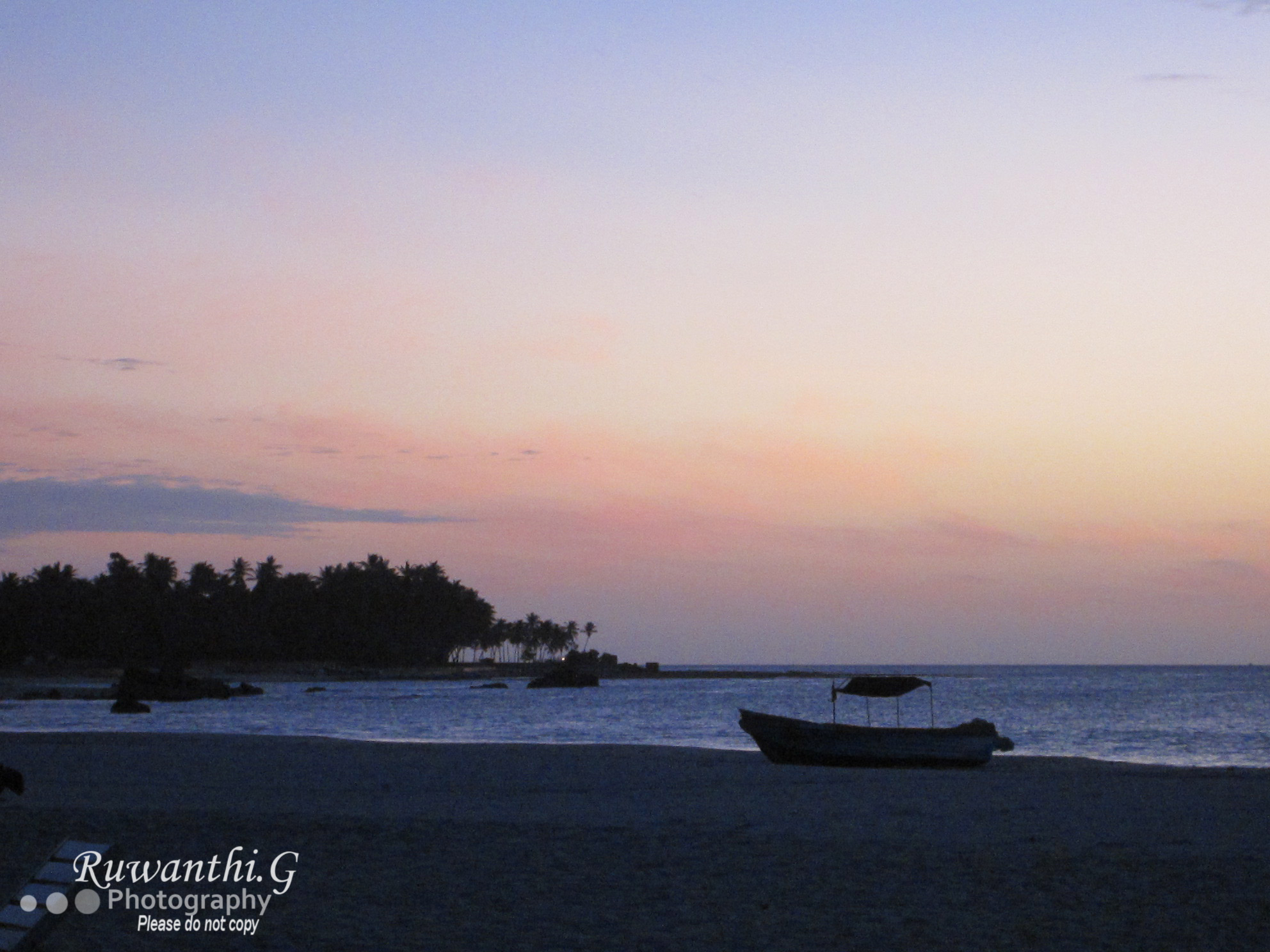
The boats, some are bobbing in the water lulled by the sound of the sea, and the smaller ones are on the sand a safe distance from the edge of the sea to be used again the next day.
And we wonder, where is all the fish that was caught today? Some were being sold at markets, some being taken from door to door by a “fisherman” (he was not really a fisherman but a fish seller but colloquially called the fisherman) by foot or by a bicycle, and the rest safely frozen in freezers. The day’s work is done.
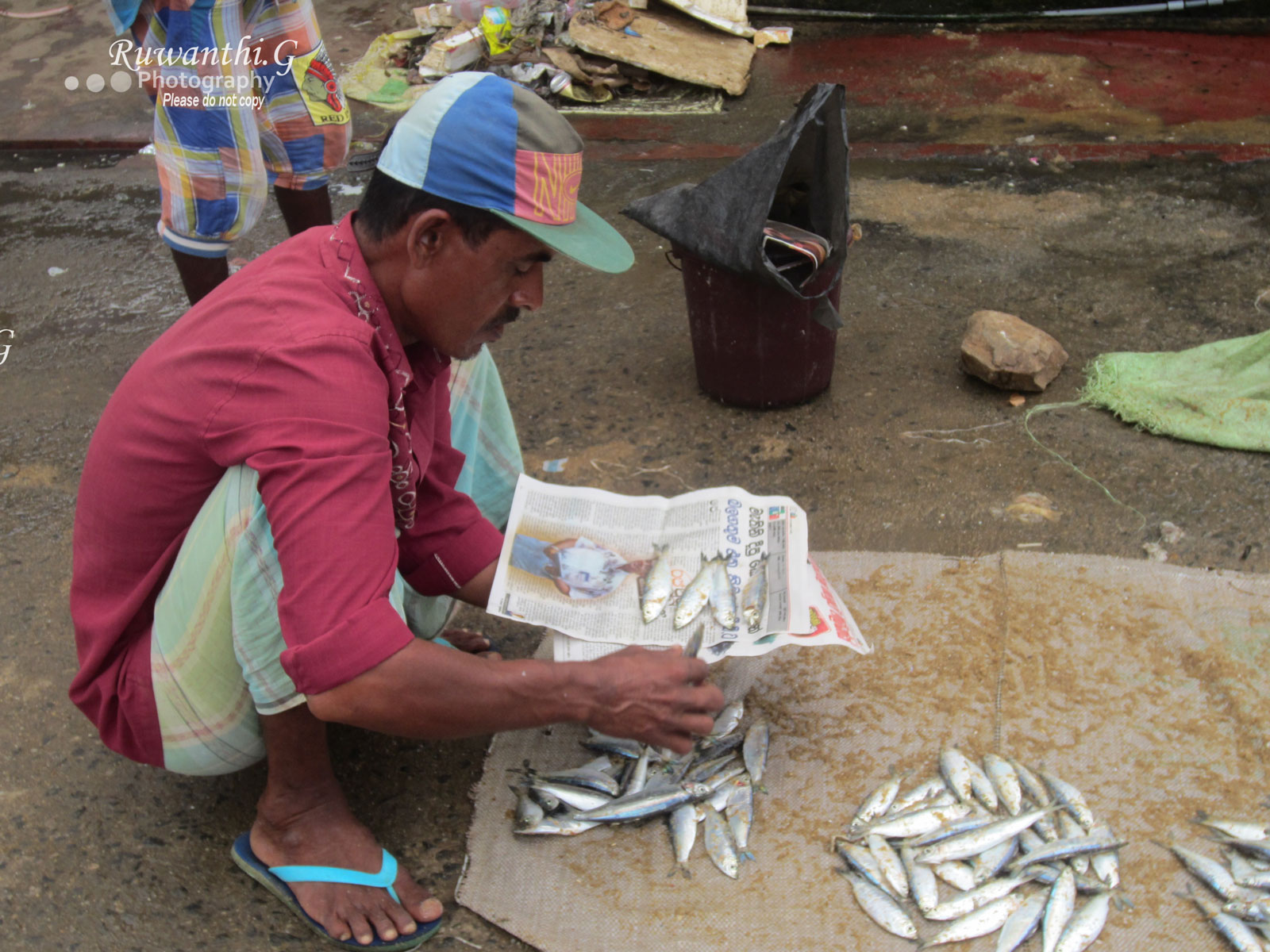
But what rings out clear is why the fishermen still live in huts made of clay and floors of cow dung and roofs of thatched palm leaves and their children still don’t go to school and their wives worry about how to get food onto the table. Why do they wear torn clothes, eat one meal a day and walk barefooted? Why do the fishermen work so hard but have no savings? The fish in the market is expensive. One would think the fishermen must be rich. But they are so poor. Then where does it go and who takes the money? It’s sad. The man who works most is the least paid and the man who works less is the riches. And they call this life?
Types of Boats in Sri Lanka
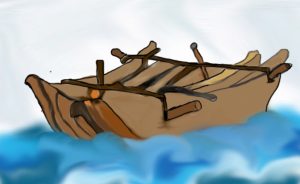
The traditional Sri Lankan fishing boat was carved out of a tree trunk, mainly from the Jackfruit tree, and was similar to a catamaran. It is called an Oruwa. It had a square sail and it had two masts (which are made of Bamboo) in a V shape and the sail was hung from the two top corners. The inside of the boat was only wide enough to put your legs in. The fishermen would sit on top of the two sides or on a plank that bridged the gap. The Oruwa is said to have been first made in the 8 th Century and was later further developed in the 18 th & 19 th Centuries to enable deep sea fishing. It is amazing that these Oruwas don’t have a single nail or iron piece in it. The sides are stitched together with choir rope. The Oruwa can travel in both directions. Its slim design enables it to go very fast.
There are many different type of Oruwa, some of them are listed below:-
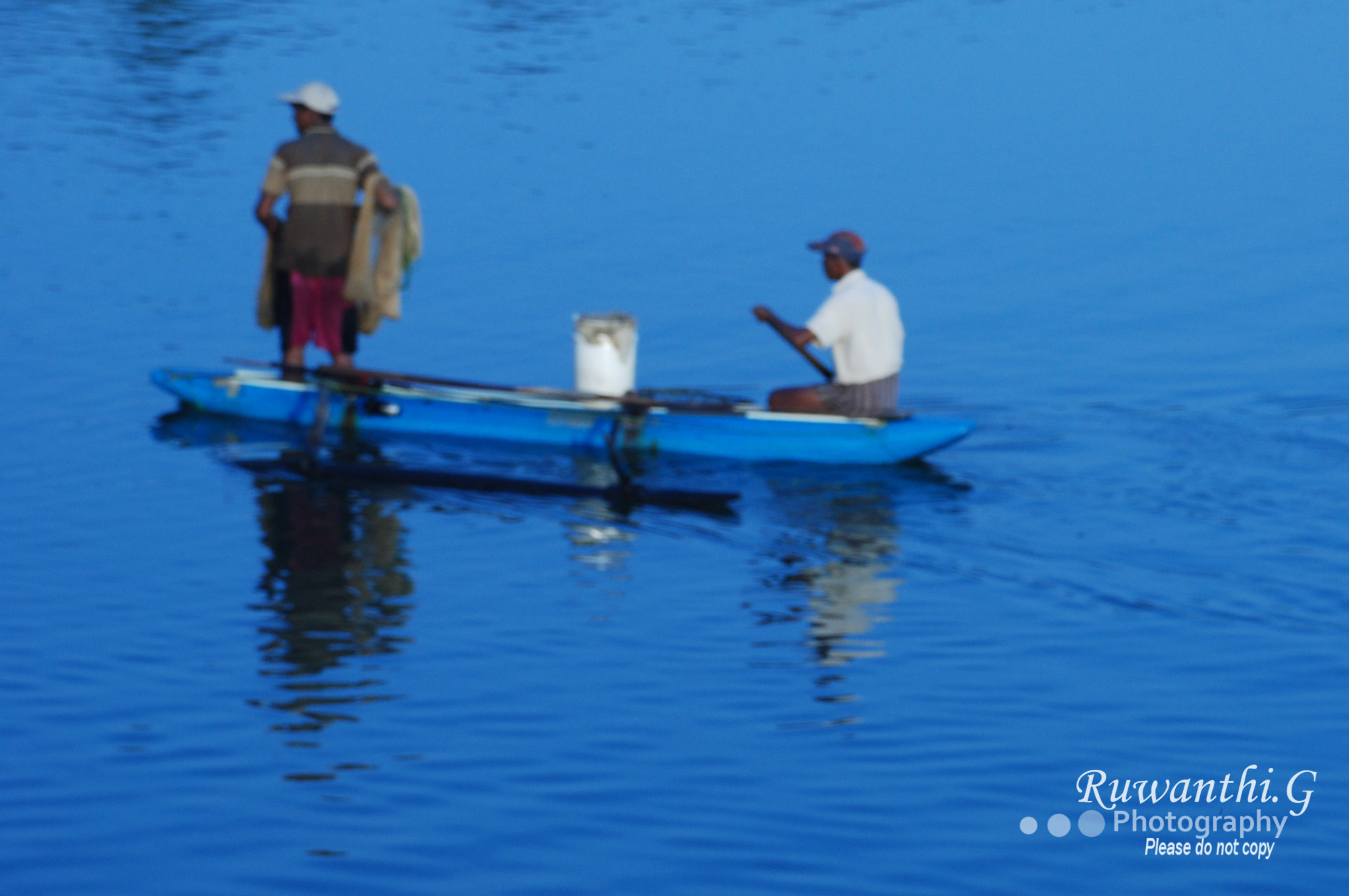
1. The Pila Oruwa is of simple design and is used for rod fishing and also for laying nets to catch prawns, lobsters and fish in the lagoons. It can accommodate only two people. It is a very small boat.
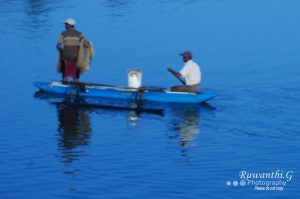
2. Dal Oruwa is a much larger version of the Pila Oruwa described above. It is used for fishing in the lagoons. Two Dal Oru are used together, one with to the left and the other to the right. The fishing nets are kept between the two boats.
3. Then the Theppama is an Oruwa does not have a sail and fisherman stand on the Oruwa and steer it with long bamboo poles. These are used mainly to cast nets into the waters of the lagoons.
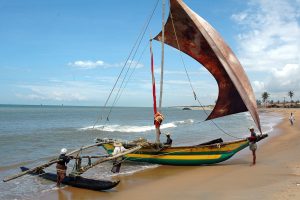
4. Ruwal Oruwa/Bala Oruwa is said to be the fastest sailing canoe in the world.
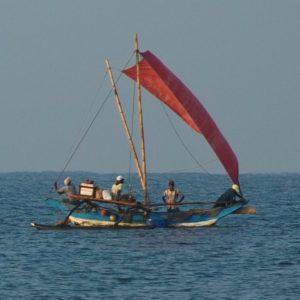
5. The Madel Oruwa is a unique boat seen only in Sri Lanka. It is used for the sole purpose of taking the fishing nets out to sea.
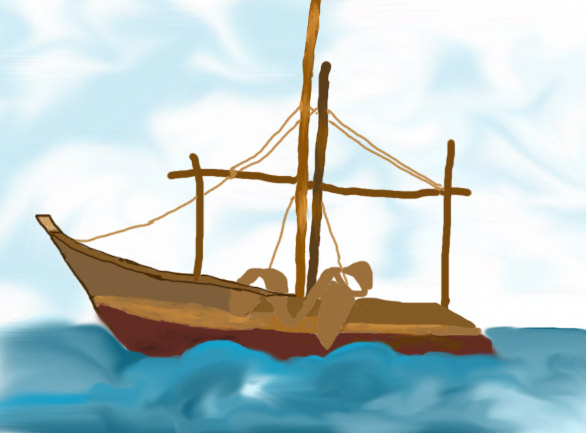
6. Vallam Oruwa is used for net and rod fishing.